

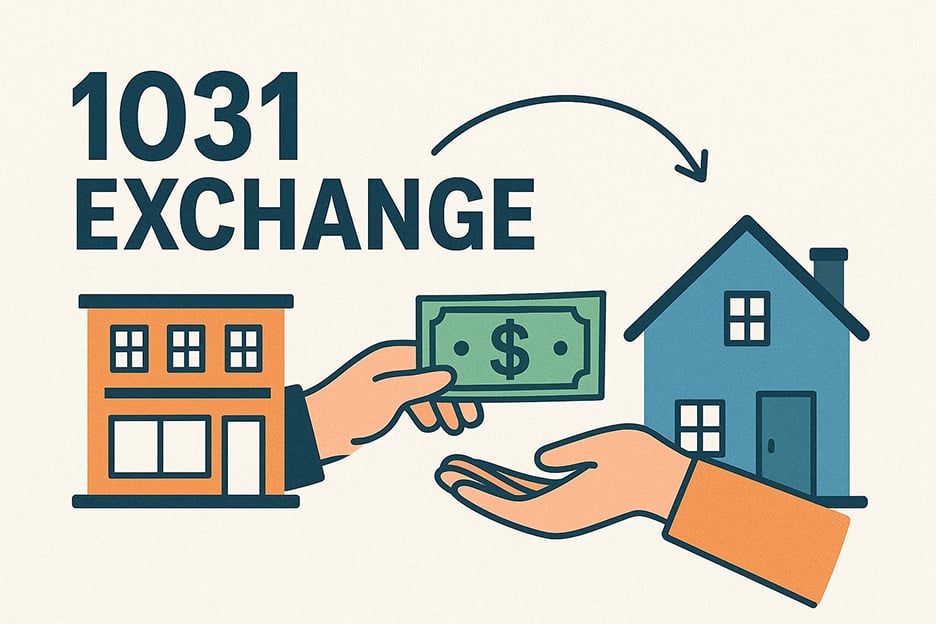
The 1031 Exchange Playbook for Berkeley and Oakland Investment Property Sellers
For owners of East Bay rental and investment property, a 1031 exchange remains one of the most powerful tools available for deferring capital gains tax on a sale, but the mechanics are unforgiving of mistakes, and the timeline moves faster than most sellers expect.
The two deadlines that define the entire process
From the day the relinquished property closes, an owner has 45 days to formally identify replacement properties and 180 days total to close on the replacement. Both deadlines are calendar days, not business days, and neither is generally extendable—which makes lining up a qualified intermediary before closing, not after, essential.
"Like-kind" is broader than most sellers assume
Like-kind, in the context of real estate, is a much looser standard th an people expect — a Berkeley duplex can generally be exchanged for a commercial building, raw land, or property in an entirely different state, as long as both properties are held for investment or business use rather than personal use.
DSTs offer a passive option for owners ready to step back
Delaware Statutory Trusts allow an owner to exchange into a fractional, passive interest in a larger property or portfolio, rather than directly managing a new replacement property. This has become a popular option among longtime East Bay landlords who want to preserve the tax deferral without taking on another round of active property management.
The most common mistake: creating accidental "boot"
Any cash or debt reduction the seller receives in the exchange that isn't reinvested—often called "boot"—becomes taxable, even within an otherwise valid exchange. This most often happens when the replacement property has a smaller loan balance than the relinquished property, catching sellers off guard at tax time.
The Bottom Line
A 1031 exchange can meaningfully change the math on selling East Bay investment property, but only when the qualified intermediary is engaged before closing and the replacement property search starts immediately, not after the 45-day clock has already begun to feel tight.
FAQ
How much time do I have to identify a replacement property?
45 calendar days from the closing of the relinquished property, with no general extension available.
How long do I have to close on the replacement property?
180 calendar days total from the original closing, which includes the 45-day identification period, not in addition to it.
Do I need to buy a similar type of property?
No. Like-kind is interpreted broadly for real estate—most investment or business-use real property can be exchanged for most other investment or business-use real property.
What is a Delaware Statutory Trust, and why do some East Bay landlords use one?
A DST allows an investor to exchange into a fractional, passive ownership interest in a larger property, which appeals to longtime landlords looking to step back from active management without losing the tax deferral.
What is "boot" and how do people accidentally trigger it?
Boot is any cash or debt-reduction benefit received in the exchange that isn't reinvested into the replacement property, most commonly triggered when the replacement property carries a smaller mortgage than the one being sold.
ABOUT ROBERT PARKER
Robert Parker is the CEO and team lead of The Parker George Team at Compass, serving the East Bay luxury residential market in Berkeley, Oakland, Piedmont, and surrounding neighborhoods. He helps buyers and sellers navigate the $1M–$5M+ market with a data-driven approach grounded in over a decade of local experience. DRE# 01923837. Connect with Robert at parkergeorge.com.
Check out this article next