

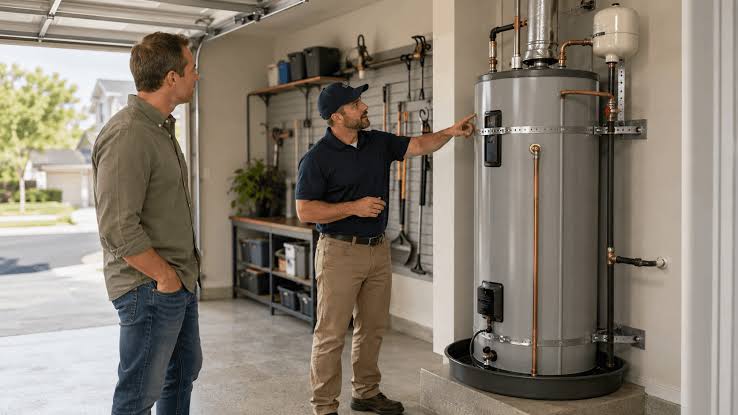
Water Heater and Appliance Point-of-Sale Requirements in California
Quick Answer
California has specific requirements around water heater seismic bracing (particularly relevant given our region's earthquake risk) and, in some cases, specific efficiency or safety standards that can become relevant at the point of a home sale—worth understanding both as a seller preparing to list and a buyer evaluating a property's compliance.
Water Heater Seismic Bracing: A California-Specific Requirement
California law generally requires water heaters to be braced, strapped, or anchored to resist falling or moving during an earthquake—this is a real, specific safety requirement given our region's seismic risk, not simply a general recommendation, connecting directly to the broader earthquake preparedness themes covered throughout our site.
Why This Matters Specifically at Point of Sale
- This is commonly checked during a home inspection (see our inspection guides), and an unbraced or improperly braced water heater is a common, relatively simple finding that often comes up in negotiations
- This is a relatively low-cost fix compared to many other inspection findings, making it a common item sellers proactively address before listing to avoid it becoming a negotiation point
- Some cities may have specific additional requirements or verification expectations beyond the general state requirement—worth confirming current specifics if you have questions
Other Appliance and System Considerations Worth Understanding
- Smoke and carbon monoxide detector requirements—California has specific requirements for these safety devices in residential properties, generally verified as part of standard disclosure and inspection processes
- General appliance efficiency standards—while not typically a point-of-sale verification requirement in the same way as water heater bracing, efficiency considerations connect to the broader energy audit themes covered in our separate guide
What Sellers Should Do Before Listing
- Confirm your water heater is properly braced according to current requirements—this is a straightforward, relatively inexpensive item worth addressing proactively rather than having it surface as an inspection finding
- Confirm smoke and carbon monoxide detectors are present and functioning according to current requirements, which is similarly straightforward to verify and address before listing
- Address these relatively simple items early in your pre-listing preparation, since they're common inspection findings that are easy and inexpensive to resolve compared to more significant issues
What Buyers Should Check
- Note the water heater bracing status during your inspection, understanding this is a relatively simple, inexpensive item to request as part of your repair negotiation if it's not currently compliant (see our negotiating repairs guide)
- Confirm smoke and carbon monoxide detector presence and function, similarly straightforward to verify
- Understand these are relatively minor items in the broader context of your inspection findings (see our severity ratings guide) — worth addressing, but not typically significant enough to warrant major negotiation leverage on their own
FAQ
Is water heater bracing legally required or just recommended?
It's a legal requirement under California law, not merely a recommendation—though enforcement at point of sale generally occurs through disclosure and inspection findings rather than a separate formal certification process.
How much does it typically cost to properly brace a water heater?
This is generally one of the more affordable inspection-related fixes, making it a common and reasonable item for either party to address without significant negotiation friction.
Do these requirements apply to tankless water heaters as well?
Bracing and mounting requirements can apply somewhat differently depending on the specific water heater type and installation—worth confirming current specific requirements for your particular system type.
Should I proactively fix a bracing issue before listing, or wait to see if it comes up in inspection?
Proactively addressing it, similar to the general pre-listing preparation philosophy discussed in our renovation ROI guide, is generally the more efficient approach given how inexpensive and straightforward this particular fix typically is.
This is general information, not legal or safety advice. Specific requirements should be confirmed with a licensed contractor or your local building department.
Bottom Line
Water heater bracing and basic safety device compliance are relatively simple, inexpensive items worth proactively addressing as a seller or checking carefully as a buyer—small fixes that prevent unnecessary friction during your transaction.
Preparing to list or evaluate a property's compliance with these basic safety requirements? Let's make sure everything's in order.
About The Parker George Team
Robert Parker and Josie George lead The Parker George Team , a Berkeley-based real estate team serving Berkeley, Oakland, Kensington, El Cerrito, Piedmont, Alameda, Albany, Emeryville, and Richmond. Robert holds the Certified Luxury Home Marketing Specialist (CLHMS) designation, and the team has been recognized by America's Best and featured in the San Francisco Business Times. Licensed with the California DRE (Robert #01923837, Josie #01990905), the team is based at 801 Delaware St, Berkeley, CA 94710.
Check out this article next