

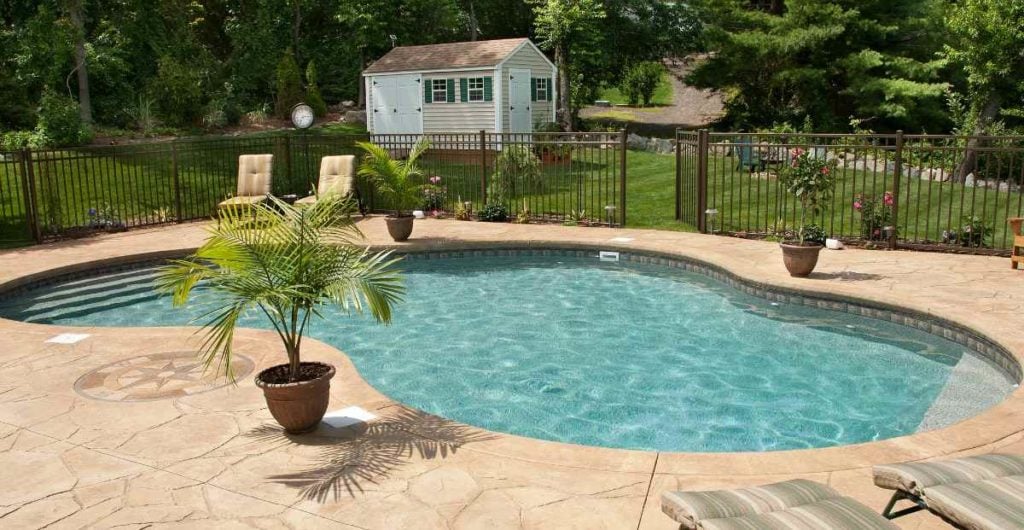
Selling a Berkeley or Oakland Home With a Pool in 2026: SB 442 Compliance, the Seven Safety Features, and How Insurance Underwriting Shapes Your Sale Price
What East Bay pool sellers actually face in 2026
If you own a pool home in Piedmont, Claremont, the Berkeley Hills, Montclair, Crocker Highlands, or Trestle Glen and you're thinking about listing, the pool is not a decorative footnote in your disclosure package — it's a compliance line item, an insurance underwriting question, and a buyer-pool filter that can move your sale price by $20,000 to $75,000. California Health & Safety Code §115922 (from SB 442, effective 2018 and amended by AB 3205) requires the home inspector to itemize which of seven drowning-prevention safety features your pool has, requires you to give the buyer a written certification of the same, and requires the report to state explicitly if the pool has fewer than two. On top of that, the federal Virginia Graeme Baker Act sets anti-entrapment drain-cover standards that Bay Area home inspectors and insurance underwriters increasingly enforce even on pre-2008 grandfathered residential pools. And on top of that, California's homeowners insurance market — up an average 84% from late-2020 to March 2026 per the Stanford Report, with another projected 16% average increase through the end of 2026 — has tightened aggressively on pool liability, with several admitted-market carriers refusing to bind coverage on non-compliant pools regardless of what the seller discloses.
This post walks through what the law actually requires, what your Bay Area buyer's inspector and insurance underwriter will flag, and the four seller paths I run my Berkeley and Oakland clients through before they list.
The Seven Safety Features: What HSC §115922 Actually Requires
California statute recognizes seven drowning-prevention safety features. Any two are enough to satisfy new-construction and remodel-permit requirements. At the time of sale, you are not required to install any of them — but you are required to certify to the buyer which ones are present, and the home inspector is required to spell it out in writing.
The seven features are: (1) an isolating enclosure or fence separating the pool from the home and yard; (2) removable mesh pool fencing meeting ASTM F2286; (3) an approved safety pool cover meeting ASTM F1346; (4) exit alarms on the home's doors that provide direct access to the pool; (5) self-closing, self-latching hardware on those same doors, with the latch at least 60 inches above the ground; (6) a pool alarm meeting ASTM F2208 that detects unauthorized entry (surface-motion or subsurface); or (7) other approved means meeting later-adopted ASTM standards.
Most East Bay pool homes built in the 1960s through the 1980s were built before this framework existed. It is common for a Piedmont or Berkeley Hills pool to fail on the specifics even when the seller thinks the pool is "fenced": the original decorative wrought iron has 6-inch pickets (the code requires no more than 4 inches), the fence gate self-latches but the latch is at 42 inches instead of 60, or the sliding glass door from the kitchen opens directly onto the pool deck without an alarm or a self-closing device. The inspector's SB 442 checklist itemizes each gap, and the buyer's lender pulls it into the file.
The Federal Layer: VGB Anti-Entrapment Drain Covers
The Virginia Graeme Baker Pool & Spa Safety Act became effective in December 2008 and requires anti-entrapment drain covers meeting ANSI/APSP-16 on all public pools and on any residential pool whose permit was issued after 2008. Residential pools built before then are grandfathered under federal law, but two things have shifted since 2020: California building departments (including Berkeley) now cite loose, missing, or broken suction outlet fittings and secondary anti-entrapment devices during inspection, and homeowners insurance underwriters increasingly ask about drain-cover compliance at bind and at renewal.
If your pool has a single main drain (the classic pre-VGB configuration), a bright orange or white domed VGB-compliant cover is usually a straightforward retrofit in the $400–$1,200 range including labor. If the pool has dual-drain plumbing already in place, replacing both covers is often under $600. The larger cost — and the one that surprises sellers — is when the pool needs a secondary suction-limiting device, such as a safety vacuum-release system or an automatic pump shut-off, which can run $800–$2,500 installed. This is the kind of item you want on the pre-listing punch list, not in a buyer's request-for-repair three days before the contingency deadline.
The Insurance Underwriting Reality in 2026
The insurance market has quietly become the second gating factor on East Bay pool-home sales. Standard California HO-3 policies include roughly $100,000 of liability coverage; most underwriters now recommend $300,000–$500,000 minimum for pool homes plus an umbrella policy for another $1M–$5M. In our price band, several admitted-market carriers — State Farm, Allstate, USAA among them — have quietly stopped binding new business on homes with diving boards, non-compliant barriers, or missing safety features. If the buyer's carrier refuses to bind, and the buyer's lender requires bound insurance at funding, the deal does not close. It re-trades or it cancels.
I run a quick pre-listing insurance check with two things in mind: does your current carrier have you on a policy that would transfer cleanly to a buyer (rarely — HO-3 doesn't transfer), and would a reasonable admitted-market carrier bind the property today based on the pool's current configuration. If the answer to the second question is "not without changes," we address the changes before we go active on the MLS. Your specific number depends on your carrier's current appetite, your pool's age, and the safety features in place — that's where a real pre-listing conversation comes in.
Disclosure Discipline: What Attaches Forever
California Civil Code §1102 governs the Transfer Disclosure Statement, and it is an actual-knowledge standard: you disclose what you know. C.A.R.'s Seller Property Questionnaire (SPQ) asks specifically about the pool and spa — condition, permits, prior repairs, heater and pump age, safety features. Civil Code §1102.1 then adds the trap most sellers do not realize: once you commission a third-party expert report (a pool inspection, a plumbing scope, an equipment-life estimate from your pool service), that report attaches to your disclosure forever, dissemination-limiting clauses are unenforceable, and you cannot un-know what the report told you.
This is not a reason to skip inspections. It is the reason to sequence them before you list, address what the reports flag, and disclose the resolved condition in a package the buyer's inspector cannot re-open easily. That is the same disclosure discipline I use on foundation, knob-and-tube, sewer laterals, and any other item where a pre-listing inspection converts a mid-escrow re-trade into a clean-package close.
The Four Seller Paths
Every pool-home listing gets one of four treatments, and the right choice depends on your pool's age, your submarket's buyer composition, and the delta between fix-it cost and buyer-credit demand.
Path 1 — Bring the pool to full compliance before listing. For a mid-century Piedmont or Montclair pool with a single main drain, decorative fencing that fails the 4-inch and 60-inch tests, and a sliding door with no alarm, expect $3,500–$12,000 all-in: $600–$1,500 for VGB drain covers and secondary anti-entrapment, $2,000–$6,000 for a code-compliant barrier or self-closing/self-latching upgrades and door alarms, and $300–$900 for the pool-inspection re-certification. On a $2.5M–$4M hillside home this is the highest-return path — you eliminate the SB 442 gap, you preserve the buyer pool, and you avoid the $15,000–$40,000 buyer-credit demand that typically follows a "fewer than two features present" inspector note.
Path 2 — Address the deal-killers, disclose the rest, and price for the delta. For sellers who don't want to touch the fence but are willing to fix drain covers and add door alarms, expect $1,200–$3,000. Include a pre-listing pool-inspection report in your disclosure package and price the home with a modest $10K–$20K "as-is barrier condition" discount baked in. Works best on $1.5M–$2.5M flat-lot homes where the buyer pool is smaller anyway and a clean disclosure story matters more than pool-cosmetic upgrades.
Path 3 — Full disclose-and-price-for-it. For an older Berkeley Hills pool with retaining-wall complications, a diving board (which triggers automatic insurance decline at several major carriers), or plumbing that would need to be re-permitted to bring to full compliance, sometimes the honest move is to price the pool as a $30K–$75K discount to the "no-pool" comp set and let the buyer decide whether to renovate, decommission (fill in), or convert to a plunge pool. This path narrows your buyer pool to roughly 20–35% of the total in flat submarkets but can hold at 60–75% in hillside luxury where a pool is a genuine amenity.
Path 4 — Decommission before listing. Rare, but occasionally the right call: filling in a pool on a $1.8M Elmwood or Rockridge lot where the pool is small, the yard is compromised by it, and every buyer walk-through response is "I'd want to remove it." Bay Area decommission-and-fill runs $8,000–$18,000 depending on drainage and access. Reclaims the full buyer pool at the cost of the amenity itself.
FAQ
Do I need a separate pool inspection, or is the general home inspection enough?
The general home inspection is enough to satisfy SB 442's checklist requirement, because HSC §115922 places the obligation on the home inspector, not on a separate pool-only report. That said, a $200–$450 pool-specific inspection from a CREIA-certified inspector adds equipment-life analysis, plumbing pressure test, and skimmer/drain integrity — items your general inspector will not cover in depth. In my experience the incremental spend is worth it if the pool is more than 25 years old.
If I have fewer than two safety features, do I have to install more before I can sell?
No. SB 442 requires disclosure, not installation. You can legally sell a pool home with zero of the seven features. What you cannot legally do is fail to disclose the count, and what you cannot practically do is expect the sale to close cleanly with buyers whose lender-required insurance carrier declines to bind on a non-compliant pool.
Does the buyer's inspector really itemize each feature?
Yes. The SB 442 checklist is standard on every Bay Area home inspection report where the property has a pool or spa. You will see each of the seven features listed with a present/absent notation and a written statement if fewer than two are present.
Does my pool add value or subtract it in the East Bay?
It depends on the submarket. In Piedmont, Claremont, upper Berkeley Hills, Montclair, and Crocker Highlands where lot sizes support a real backyard, a well-maintained pool typically holds or adds value in the $10K–$40K range. In flat Berkeley below Ashby, in the Rockridge and Temescal flats, and in most Adams Point / Piedmont Avenue single-family lots, a pool typically narrows the buyer pool enough to trade at a $10K–$30K discount relative to the equivalent no-pool comp. Your specific number depends on your lot and your submarket.
What if my carrier already dropped me on the pool?
Then we sequence around that before we list. The buyer's carrier will run the same underwriting logic yours did. If we know a non-admitted-market or specialty carrier is the only bind path, we build that into the disclosure package and pre-vet buyers accordingly. This is exactly the kind of question I walk my clients through before we even talk about listing.
Getting Your Specific Number
Every pool-home sale I work has three variables: what the safety-feature audit turns up, what the current insurance market says about your specific pool configuration, and where your submarket puts pool amenity value on a $/sf basis. I prepare a custom net sheet for every seller I work with — actual estimated proceeds based on East Bay market data, your home's condition, and current closing costs. No automated estimate, no generic Zestimate. Just real numbers.
About the Author
Robert Parker is the CEO and team lead of The Parker George Team at Compass, serving the East Bay luxury residential market in Berkeley, Oakland, Piedmont, and surrounding neighborhoods. He helps buyers and sellers navigate the $1M–$5M+ market with a data-driven approach grounded in over a decade of local experience. DRE# 01923837. Connect with Robert at parkergeorge.com.
Check out this article next