

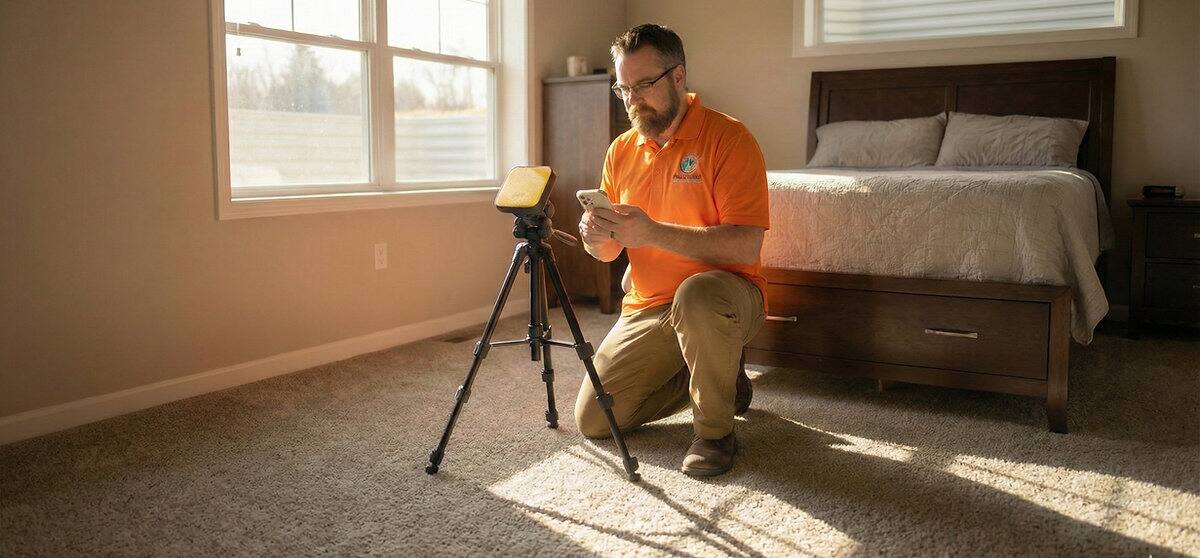
Radon Testing: Should East Bay Buyers Test for It?
Quick Answer
Radon—a naturally occurring radioactive gas that can accumulate in homes, particularly in basements and lower levels—is generally a lower-priority concern in most of the East Bay compared to higher-radon regions of the country, but testing remains a low-cost, worthwhile step for buyer peace of mind, especially for homes with basements (see our separate basement guide).
What Radon Actually Is and Why It Matters
Radon is a colorless, odorless gas produced by the natural decay of uranium in soil and rock, which can seep into homes and accumulate to levels considered a long-term health risk with prolonged exposure. Unlike the acute risks covered in our inspection red-flags guide, radon risk is specifically about long-term, cumulative exposure rather than an immediate concern.
Why This Receives Less Attention in the East Bay Specifically
Radon risk correlates significantly with underlying geology, and much of the Bay Area, including the East Bay, generally falls into lower-risk radon zones compared to certain other regions of California and the country—this is part of why it receives less routine attention here compared to markets in higher-risk zones, though it's not something to dismiss entirely.
Why Testing Is Still Worth Considering
- It's a low-cost, straightforward test—a simple, relatively inexpensive test can be added to your inspection period without significant cost or complexity.
- Basement and lower-level homes (see our separate basement guide) carry somewhat elevated exposure potential compared to homes without below-grade living space, given radon's tendency to accumulate at ground level.
- Peace of mind has real value, even in a generally lower-risk region, particularly for buyers planning a long-term hold or with specific health sensitivity concerns.
How Testing Works
- Short-term tests (typically a few days) provide a preliminary reading, often used during a real estate transaction's inspection period given the time constraints involved.
- Long-term tests (several months to a year) provide a more representative average reading, though this timeline doesn't fit typical transaction schedules.
- Results are measured against an EPA action level—readings above this threshold generally warrant mitigation consideration, while readings below don't typically require action.
What Happens If a Test Shows Elevated Levels
- Mitigation systems exist and are generally effective—typically involving a venting system that redirects radon gas from beneath the home's foundation to the outside, safely above roof level.
- This can be negotiated as part of your transaction, similar to other inspection findings (see our contingency periods and inspection severity ratings guides), potentially resulting in a seller-funded mitigation system or a credit for the buyer to install one after closing.
Practical Steps
- Consider adding a radon test to your inspection scope, particularly for a home with a basement or lower-level living space.
- Discuss timing with your inspector, since short-term tests need to fit within your contingency period timeline.
- Understand mitigation is a manageable, well-established solution if elevated levels are found, rather than a major concern requiring you to walk away from an otherwise good property.
FAQ
Is radon testing a standard part of most East Bay home inspections?
Not always automatically included—it's often available as an add-on service, worth specifically requesting if you want it included, particularly for basement or lower-level properties.
Does an elevated radon reading mean I should cancel my purchase?
Not necessarily—elevated readings can generally be effectively addressed through mitigation, which can be negotiated as part of your transaction, similar to other inspection findings.
Is the East Bay considered a high-radon region overall?
Generally lower-risk compared to certain other regions, though specific local variation exists—testing remains a reasonable, low-cost step for individual property peace of mind regardless of general regional risk level.
How much does a radon mitigation system typically cost if needed?
Costs vary based on the specific system design and home's construction, but mitigation is a well-established, generally effective solution—worth getting a specific quote if elevated levels are found on a property you're considering.
This is general information, not health or safety advice specific to any individual. Consult a certified radon testing professional and, for health-related questions, a medical professional for guidance specific to your situation.
Bottom Line
Radon testing is a low-cost, low-effort addition to your due diligence that provides genuine peace of mind, particularly for homes with basements—a reasonable step even in the East Bay's generally lower-risk radon zone.
Considering a home with a basement or lower-level living space and want to add radon testing to your inspection? Let's build that into your due diligence plan.
About The Parker George Team
Robert Parker and Josie George lead The Parker George Team , a Berkeley-based real estate team serving Berkeley, Oakland, Kensington, El Cerrito, Piedmont, Alameda, Albany, Emeryville, and Richmond. Robert holds the Certified Luxury Home Marketing Specialist (CLHMS) designation, and the team has been recognized by America's Best and featured in the San Francisco Business Times. Licensed with the California DRE (Robert #01923837, Josie #01990905), the team is based at 801 Delaware St, Berkeley, CA 94710.
Check out this article next