

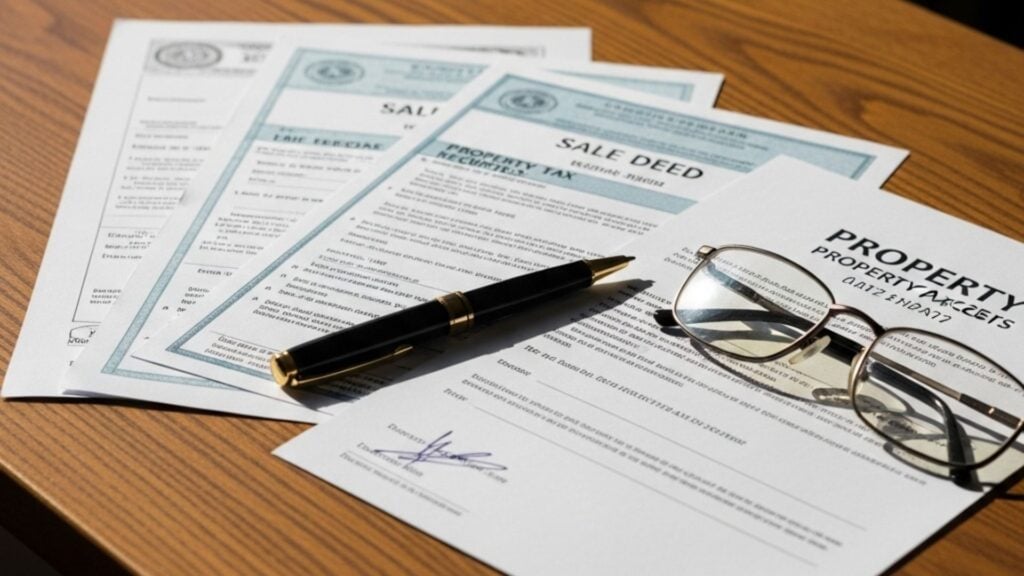
Recorded vs. Unrecorded Documents: Why Recording Your Deed Matters
Quick Answer
Recording a deed with the county puts the world on legal notice of your ownership interest, protecting you against competing claims—an unrecorded deed, while still potentially valid between the original parties, leaves you exposed to real risk if a dispute or competing claim arises.
What Recording Actually Does
When a deed or other real property document is recorded with the county recorder's office, it becomes part of the public record, establishing a clear, dated, and searchable chain of title. This is what a title company reviews when preparing your preliminary title report (see our separate guide) and what helps protect your ownership interest against later competing claims.
Why an Unrecorded Deed Is Risky
A deed can technically be valid between the parties who signed it even without recording—but without recording, there's no public notice of the transfer, meaning:
- A subsequent buyer or lender, without knowledge of your unrecorded interest, could potentially gain a superior claim under California's recording laws, depending on the specific circumstances.
- Your ownership interest is essentially invisible to anyone researching the property's title, creating real risk if a dispute arises.
- Financing and future sales become complicated, since lenders and title companies rely on the recorded chain of title to confirm ownership.
Common Situations Where Recording Gets Overlooked
- Informal family transfers — sometimes a deed is signed between family members but never actually recorded, particularly in situations lacking professional guidance.
- Older transactions where recording wasn't properly completed at the time, sometimes only discovered years later during a subsequent sale's title search.
- Transfers into or out of a trust (see our estate planning guide) that aren't properly recorded as part of the broader estate planning process.
How to Confirm Your Own Deed Is Properly Recorded
- Check with the county recorder's office (Alameda County Recorder, for properties in that county) to confirm your deed is on record.
- Review your closing documents from your original purchase, which should include confirmation of recording.
- If you're uncertain about an older or informal transfer, consult a real estate attorney or title company to research and, if needed, properly record the appropriate documentation.
Why This Matters Especially for Family and Estate-Related Transfers
Given how often family transfers (see our family sale, estate planning, and deed type guides) are handled somewhat informally compared to a standard arm's-length purchase, this is exactly the scenario where recording can be overlooked — worth double-checking if you've been involved in any such transfer, whether recently or years ago.
FAQ
Is a deed automatically recorded when a sale closes?
In a standard, professionally handled transaction, yes — your title or escrow company handles recording as a standard part of closing. This is generally not something you need to separately request in a typical purchase.
What if I discover an old family transfer was never properly recorded?
This is worth addressing with a real estate attorney or title company promptly, since it can be corrected, but leaving it unresolved creates ongoing risk, particularly if you ever want to sell, refinance, or transfer the property further.
Does recording cost money?
Yes—recording fees are a standard, generally modest part of closing costs (see our closing costs breakdown guide), collected as part of the transaction.
Can someone else record a competing claim against my property if my deed isn't recorded?
This is exactly the risk unrecorded deeds create—without your interest properly recorded and part of the public record, a subsequent transaction or claim could potentially take priority under California's recording laws, depending on the specific circumstances involved.
This is general information, not legal advice. Recording laws and their application to specific situations can be complex—consult a real estate attorney or title company for guidance specific to your situation.
Bottom Line
Recording isn't just a bureaucratic formality — it's the mechanism that helps protect your ownership interest against competing claims, and it's worth confirming directly if you have any uncertainty about an older or informally handled property transfer.
Have questions about whether a past property transfer was properly recorded? Let's help you get clarity.
About The Parker George Team
Robert Parker and Josie George lead The Parker George Team, a Berkeley-based real estate team serving Berkeley, Oakland, Kensington, El Cerrito, Piedmont, Alameda, Albany, Emeryville, and Richmond. Robert holds the Certified Luxury Home Marketing Specialist (CLHMS) designation, and the team has been recognized by America's Best and featured in the San Francisco Business Times. Licensed with the California DRE (Robert #01923837, Josie #01990905), the team is based at 801 Delaware St., Berkeley, CA 94710.
Check out this article next