

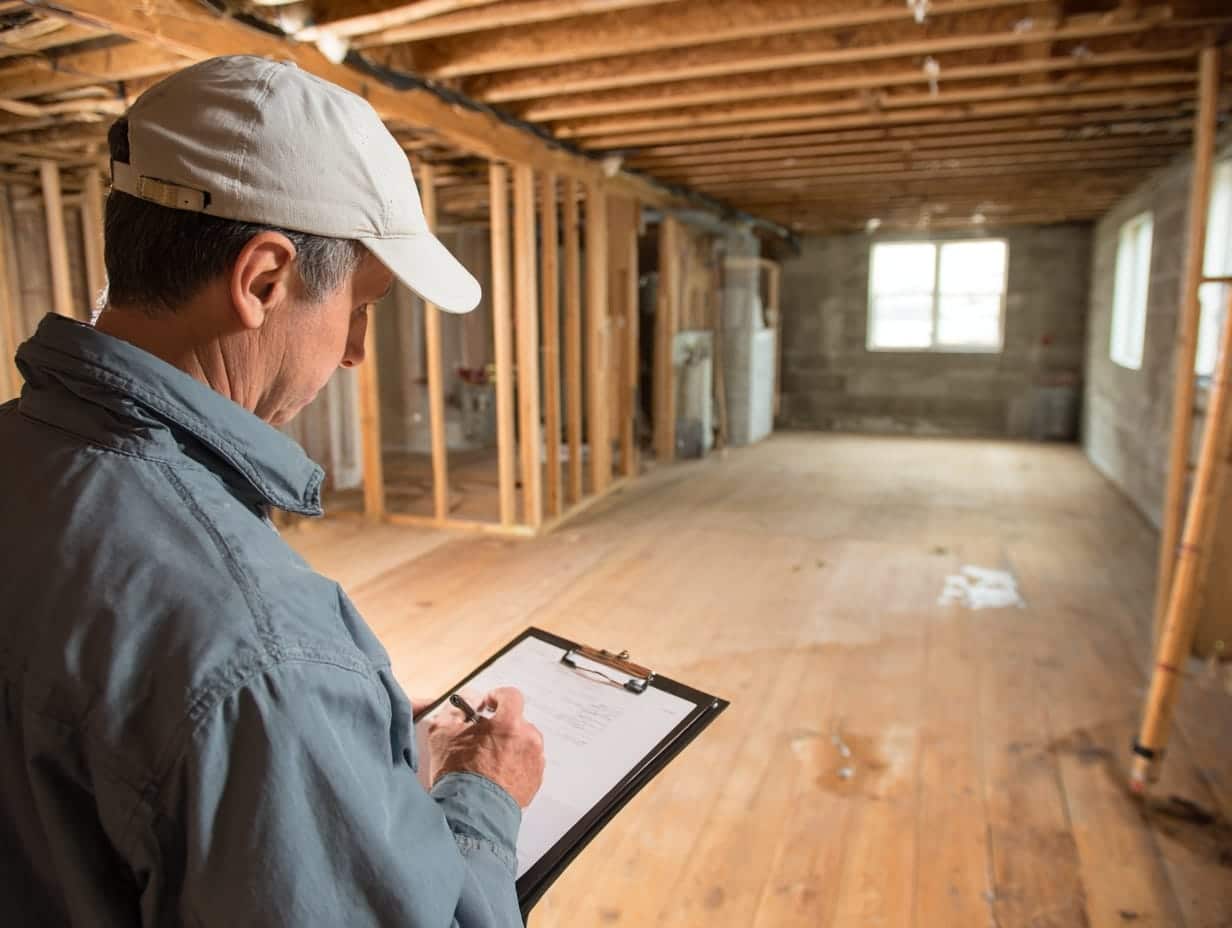
Selling a Berkeley or Oakland Home with Unpermitted Work in 2026: Disclosure, Retroactive Permits, and the Square-Footage Problem
Quick answer: what happens when you sell an East Bay home with unpermitted work?
If you're selling a Berkeley or Oakland home with a finished basement, in-law unit, garage conversion, deck, or addition that was built without permits, California Civil Code §1102 still requires you to disclose it on the Transfer Disclosure Statement — "as-is" sales do not waive this obligation. The three real costs are: an appraisal hit (appraisers typically exclude unpermitted square footage from the gross living area, which can drop value 15–25% on that space), lender risk (FHA, VA, and many conventional lenders won't finance properties with known unpermitted livable space), and negotiation leverage to the buyer. You generally have three paths: disclose and price for it, pursue a retroactive permit (Berkeley charges double investigation fees; Oakland uses an "Alternative 1 / Alternative 2" pathway), or — if it's a pre-2020 second unit on a single-family Berkeley lot — apply to Berkeley's ADU Amnesty Program, which runs January 1, 2025 through December 31, 2028 and waives penalty fees.
If your home is in North Berkeley, Rockridge, Elmwood, Montclair, Glenview, the Berkeley Hills, or any of the older East Bay neighborhoods where the housing stock predates 1978, there is a meaningful chance that some portion of your square footage was built without a permit. This is not unusual. Berkeley's own ADU Amnesty Program was created precisely because the city has, in its own words, "a substantial number" of bootleg garage conversions, basement units, and backyard cottages that were added over decades by previous owners.
The question is not whether unpermitted work hurts the sale of a luxury East Bay home. It does. The question is HOW MUCH, and WHAT TO DO ABOUT IT BEFORE LISTING. This post walks through the disclosure rules, the three real cost categories, and the three realistic paths forward — including the Berkeley amnesty window that closes at the end of 2028.
California's disclosure rule: you cannot "as-is" your way out
The single most important thing to understand is that California Civil Code §1102 makes the Transfer Disclosure Statement (TDS) mandatory and non-waivable. Civil Code §1102.1 states specifically that "the delivery of a real estate transfer disclosure statement may not be waived in an 'as-is' sale." The California Court of Appeal has confirmed that labeling a sale "as-is" does not eliminate the seller's duty to disclose known material facts. Unpermitted work is a known material fact. If you know about it — even if a prior owner did it — you have to disclose it.
This is not a paperwork formality. Buyers have successfully sued sellers years after closing for failing to disclose unpermitted construction, and the legal exposure can far exceed the cost of doing the disclosure correctly in the first place. There is one more wrinkle for recent renovators: under California's AB 968 (effective July 2024), if you took title to the property within the previous 18 months and made any room additions, structural modifications, or repairs by a contractor that cost $500 or more, you must specifically disclose that work. AB 968 was written to crack down on flippers, but the disclosure obligation applies to anyone who fits the criteria.
Two practical things follow. First, the as-is sale (https://parkergeorge.com/the-dos-donts-of-selling-a-home-as-is/) does not protect you from a disclosure lawsuit — it only sets buyer expectations about repair credits. Second, the right move is almost always to disclose proactively and price the home in a way that accounts for the work. The worst outcomes I see in East Bay transactions come from sellers who knew about a finished basement or a converted garage, hoped it wouldn't come up, and ended up in escrow renegotiation when the appraiser flagged the square footage discrepancy or the lender pulled the file.
What unpermitted work actually costs you at sale
There are three distinct cost categories, and they stack.
HIT ONE — the appraisal and square footage problem. California appraisers typically exclude unpermitted square footage from the gross living area (GLA) calculation. The published industry guidance puts the discount at 15–25% on unpermitted space relative to permitted, but in practice many appraisers go further and exclude it entirely from GLA, valuing it instead as ancillary space (storage, hobby room) rather than living area. If your Berkeley home is marketed as a 2,400-square-foot four-bedroom, but the appraiser determines that 500 square feet of the lower level was finished without permits, the appraisal can come back as a 1,900-square-foot home — and the dollar impact at East Bay luxury price points ($1,000 to $1,500 per square foot in Rockridge, North Berkeley, Elmwood, and Crocker Highlands) is straightforward to compute. That is real money: $500,000 to $750,000 of perceived value can move based on how the appraiser handles a single unpermitted addition. See more on how appraisals work in East Bay transactions (https://parkergeorge.com/the-truth-about-appraisals-what-buyers-sellers-should-expect/).
HIT TWO — the lender risk. FHA and VA loan underwriters are stricter than conventional lenders and frequently refuse to finance homes with known unpermitted livable space until the work is either legalized or removed. Conventional lenders vary: some will fund the deal if the appraiser notes the work was completed in a "workmanlike manner," others will not. In a buyer pool that is heavily reliant on jumbo financing — which is most of the East Bay $1M–$5M segment — pulling FHA and VA buyers out, and creating uncertainty for conventional buyers, materially shrinks the pool. A shrunken buyer pool produces fewer offers, which produces lower final price.
HIT THREE — the negotiation hit. Even when the appraisal comes in and the lender funds, buyers and their agents use unpermitted work as leverage. The classic pattern is a request for a price reduction or repair credit during the inspection contingency period, sometimes paired with the threat to walk. Buyers tend to overestimate the cost of legalization (they will quote you $80,000 to permit a finished basement that an experienced contractor would handle for $20,000), and absent counter-data the negotiation drifts in their direction. This is part of why the closing costs that catch sellers off guard (https://parkergeorge.com/the-closing-costs-nobody-warned-you-about/) often exceed what they planned for.
Your three paths forward
Your specific number depends on your home's condition, your neighborhood's micro-market, the type and scale of the unpermitted work, and what the city's records show — that's where a real net sheet comes in. With that caveat, the decision usually narrows to one of three paths.
PATH 1 — Disclose, price for it, sell. This is the right answer for many luxury East Bay sellers, especially when the unpermitted work is small (a finished basement with no kitchen, a permitted-but-altered deck, a sunroom enclosure) and the cost of retroactive permitting would exceed the value the permit would unlock. You disclose on the TDS, you provide the buyer with a copy of the permit history (or its absence), you price the home in a way that prices in the cost of legalization, and you market it transparently. Buyers in the East Bay luxury segment are sophisticated; they expect older homes to have surprises, and they respond well to documented honesty.
PATH 2 — Retroactive permit. Both Berkeley and Oakland have processes for retroactively permitting work that was done without authorization. Berkeley's Building and Safety Division charges an "investigation fee" of double the standard permit fee on work done without a permit; Oakland routinely charges double or quadruple the normal permit fee for retroactive work and adds investigation charges on top. Oakland specifically offers two pathways for undocumented dwelling units: Alternative 1 evaluates the unit against current housing code maintenance standards and against the zoning regulations in effect at the time the work was built, while Alternative 2 requires the space to be brought up to CURRENT planning and building codes as if it were new construction. Alternative 1 is usually the cheaper path because you don't have to redo the work to today's energy and structural standards; Alternative 2 is sometimes the only path if zoning has tightened. Expect retroactive permitting on a meaningful project (finished basement with bathroom, converted garage with kitchen, in-law unit) to cost $15,000 to $50,000 in soft costs, permit fees, and code-compliance work — but to add 15–25% back to the value of that square footage and to unlock the full buyer financing pool.
PATH 3 — Berkeley ADU Amnesty Program. If you have an unpermitted second unit (ADU or Junior ADU) on a single-family Berkeley lot that was built before January 1, 2020, this is the path you want to evaluate first. The program runs January 1, 2025 through December 31, 2028, waives the penalty fees that would otherwise apply, and includes free and confidential pre-application consultations with city planning staff. The program offers two endings: a Certificate of Compliance if the unit already meets minimum building and safety standards, or a Certificate of Occupancy if upgrades are required. The contact at the city is [email protected]. The amnesty is one of the highest-leverage tools available to a Berkeley seller right now — but the window closes at the end of 2028, and once it closes, the standard double-investigation-fee structure returns. Oakland has its own loan program to help convert illegal second units to ADUs, but it does not waive the same penalty fees Berkeley does during the amnesty period.
How to pull permit history before you decide
Before any of the three paths makes sense, you need to know what the city's records actually show. In Berkeley, you can request the permit history directly from the Planning and Development Department's online portal, and any work that was never permitted will simply not appear — the absence of a record is its own data point. In Oakland, the Planning and Building Records request system gives you the same kind of historical file. The key is that unpermitted work doesn't show up in the city records, so when an appraiser pulls the file and sees a 1,900-square-foot footprint while marketing materials show 2,400, the appraiser will trust the city.
This is exactly the kind of question I walk my clients through before we even talk about listing. Pull the permit history first. Compare it to what's actually built. Then we know which path makes sense, and at what price point the math works.
FAQ:
Do I have to disclose unpermitted work the previous owner did?
Yes. If you know about it, you must disclose it on the TDS, even if you personally did not do the work. Knowledge — not authorship — triggers the duty under Civil Code §1102. The standard pattern is for the inspection during your original purchase to have flagged the unpermitted space, which means you "knew" from the day you closed. An honest TDS protects you from a future lawsuit; silence does not.
Will an as-is sale clause protect me?
No. Civil Code §1102.1 explicitly says the TDS cannot be waived in an as-is sale. California courts have repeatedly held that an "as-is" clause does not relieve a seller of liability for failing to disclose a known material defect. As-is sets the buyer's expectation that you will not provide repair credits — it does not eliminate your disclosure obligation.
How much does unpermitted square footage actually reduce my home's appraised value?
Industry guidance discounts unpermitted square footage by 15–25%, but many appraisers exclude it from the gross living area calculation entirely, valuing it as ancillary space. At East Bay luxury price points of roughly $1,000 to $1,500 per square foot, a 500-square-foot unpermitted finished basement can move appraised value by $250,000 to $750,000, depending on how strictly the appraiser interprets the guidance and how the lender wants it handled.
Is the Berkeley ADU Amnesty Program worth the effort if I'm planning to sell?
For most pre-2020 unpermitted second units on Berkeley single-family lots, yes. The amnesty waives the penalty fees that would otherwise apply (Berkeley's investigation fee is double the standard permit fee outside the amnesty window), and it converts an unpermitted unit into either a Certificate of Compliance or a Certificate of Occupancy — both of which restore the unit's value at sale and make the property financeable for a broader buyer pool. The program window closes December 31, 2028; the standard penalty structure resumes January 1, 2029.
What if I just sell to a cash buyer or investor and skip the disclosure problem?
You can sell to a cash buyer, but you cannot skip the disclosure. Civil Code §1102 applies to most residential transactions regardless of buyer type, and the TDS is required. Cash buyers will discount the price aggressively because they know the typical buyer pool is shrunken by the unpermitted work — in my experience, the all-cash discount runs 10–20% below what a transparent, well-priced listing with full disclosure would have achieved, even after accounting for permit and repair costs. The cash route makes sense if you need speed and certainty above price, not if you're optimizing for proceeds.
The bottom line
If you're a long-term East Bay homeowner thinking about selling, pull your permit history before anything else. If unpermitted work shows up, you have time to evaluate the three paths — disclose and price, retroactive permit, or Berkeley amnesty — and to choose the one that delivers the best net at the closing table. The worst outcome is to find out in escrow, when your leverage is gone and the buyer's leverage is at its peak.
Want to know your specific number? I prepare a custom net sheet for every seller I work with — actual estimated proceeds based on East Bay market data, your home's condition, the permit history, and current closing costs. No automated estimate, no generic Zestimate. Just real numbers.
Get your custom net sheet → https://parkergeorge.com/home-valuation
Robert Parker is the CEO and team lead of The Parker George Team at Compass, serving the East Bay luxury residential market in Berkeley, Oakland, Piedmont, and surrounding neighborhoods. He helps buyers and sellers navigate the $1M–$5M+ market with a data-driven approach grounded in over a decade of local experience. DRE# 01923837. Connect with Robert at parkergeorge.com.
Check out this article next