

Graywater and Rainwater Catchment Systems: What Buyers Should Know
Quick Answer
Some East Bay homes, particularly those with owners focused on sustainability, have graywater recycling or rainwater catchment systems installed—these can be genuine value-adds given the region's water conservation priorities (see our separate rebate guide), but deserve specific due diligence around permitting, maintenance, and actual functionality.
Understanding the Difference Between These Two Systems
Graywater systems
Capture and redirect relatively clean wastewater (from showers, bathroom sinks, and laundry—excluding toilet and kitchen sink water, which is considered "blackwater") for reuse, typically for landscape irrigation, reducing overall water consumption.
Rainwater catchment systems
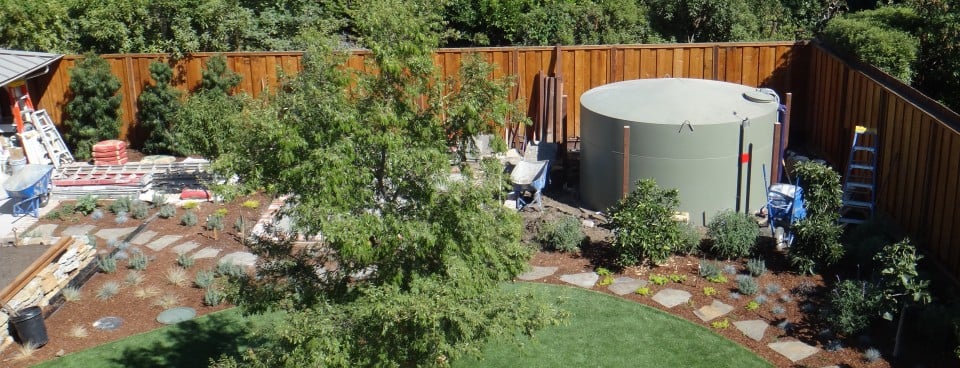
Capture rainwater, typically from roof runoff, storing it for later use—irrigation—and in some more elaborate systems, additional uses depending on the system's filtration and treatment level.
Why These Systems Appear in East Bay Homes
Given the region's sustainability-minded community and periodic drought conditions (see our water conservation rebate guide), these systems represent a genuine, values-aligned investment for some homeowners—worth understanding if you're evaluating a property with one installed or considering adding one yourself.
Permitting Considerations
- Simple, small-scale graywater systems (like a laundry-to-landscape system, one of the simplest configurations) are sometimes permit-exempt under specific state and local guidelines, though this should be confirmed directly rather than assumed.
- More complex or larger-scale systems generally require permits, connecting to the broader renovation permit considerations covered in our separate guide.
- Rainwater catchment systems similarly have varying permit requirements based on scale and ccomplexity—asimple rain barrel is quite different from an elaborate whole-property catchment and filtration system.
What to Check If You're Considering a Property With an Existing System
- Confirm the system was properly permitted if it's beyond the simplest exempt configurations, similar to verifying any other significant home system's compliance.
- Ask about actual functionality and maintenance history—these systems require some ongoing maintenance to function properly, and a system that hasn't been actively maintained may need attention before it's genuinely useful.
- Understand what the system actually supports—irrigation only, or more extensive use—since this affects how much practical value it adds to your ownership experience.
- Ask for any documentation of the system's design and installation, which helps you understand what you're actually working with and plan for future maintenance.
Why This Connects to Broader Water Conservation Value
- These systems can meaningfully reduce your water costs and consumption, particularly relevant given water conservation priorities discussed in our separate rebate guide.
- A well-documented, properly functioning system can be a genuine marketing point for sellers specifically appealing to sustainability-minded buyers.
- For buyers not particularly interested in maintaining such a system, understanding whether it can simply remain dormant without issue or whether it requires active decommissioning consideration is worth clarifying.
FAQ
Do I need to actively use a graywater or rainwater system if a property has one installed?
Generally not required—you can typically choose whether to actively use and maintain the system, though understanding its current condition and any implications of leaving it dormant is worth discussing with the seller or a specialist if you're unsure.
Does having one of these systems affect my homeowners insurance?
Worth confirming with your insurance broker, though this isn't typically a major factor for well-installed, properly functioning systems—more relevant would be any water damage history connected to system issues, which should be part of your standard disclosure review.
Can I add a graywater or rainwater system to a property that doesn't currently have one?
Yes, this is a common home improvement project for interested homeowners—worth researching current permit requirements and, potentially, available rebates for your specific planned system.
Do these systems significantly affect a home's resale value?
This varies by buyer preference—some specifically value this kind of sustainability investment, while others may be neutral or uncertain about it; worth discussing with an agent familiar with your specific target buyer pool if you're considering this as a seller.
This is general information, not legal or engineering advice. Graywater and rainwater system permit requirements vary by scale and jurisdiction—confirm current requirements directly with the relevant city building department.
Bottom Line
Graywater and rainwater catchment systems represent a genuine, values-aligned investment some East Bay homeowners have made—worth understanding their permit compliance and actual functionality if you're evaluating a property with one or considering adding one yourself.
Evaluating a property with a graywater or rainwater system, or interested in adding one? Let's help you understand what's involved.
About The Parker George Team
Robert Parker and Josie George lead The Parker George Team , a Berkeley-based real estate team serving Berkeley, Oakland, Kensington, El Cerrito, Piedmont, Alameda, Albany, Emeryville, and Richmond. Robert holds the Certified Luxury Home Marketing Specialist (CLHMS) designation, and the team has been recognized by America's Best and featured in the San Francisco Business Times. Licensed with the California DRE (Robert #01923837, Josie #01990905), the team is based at 801 Delaware St, Berkeley, CA 94710.
Check out this article next