

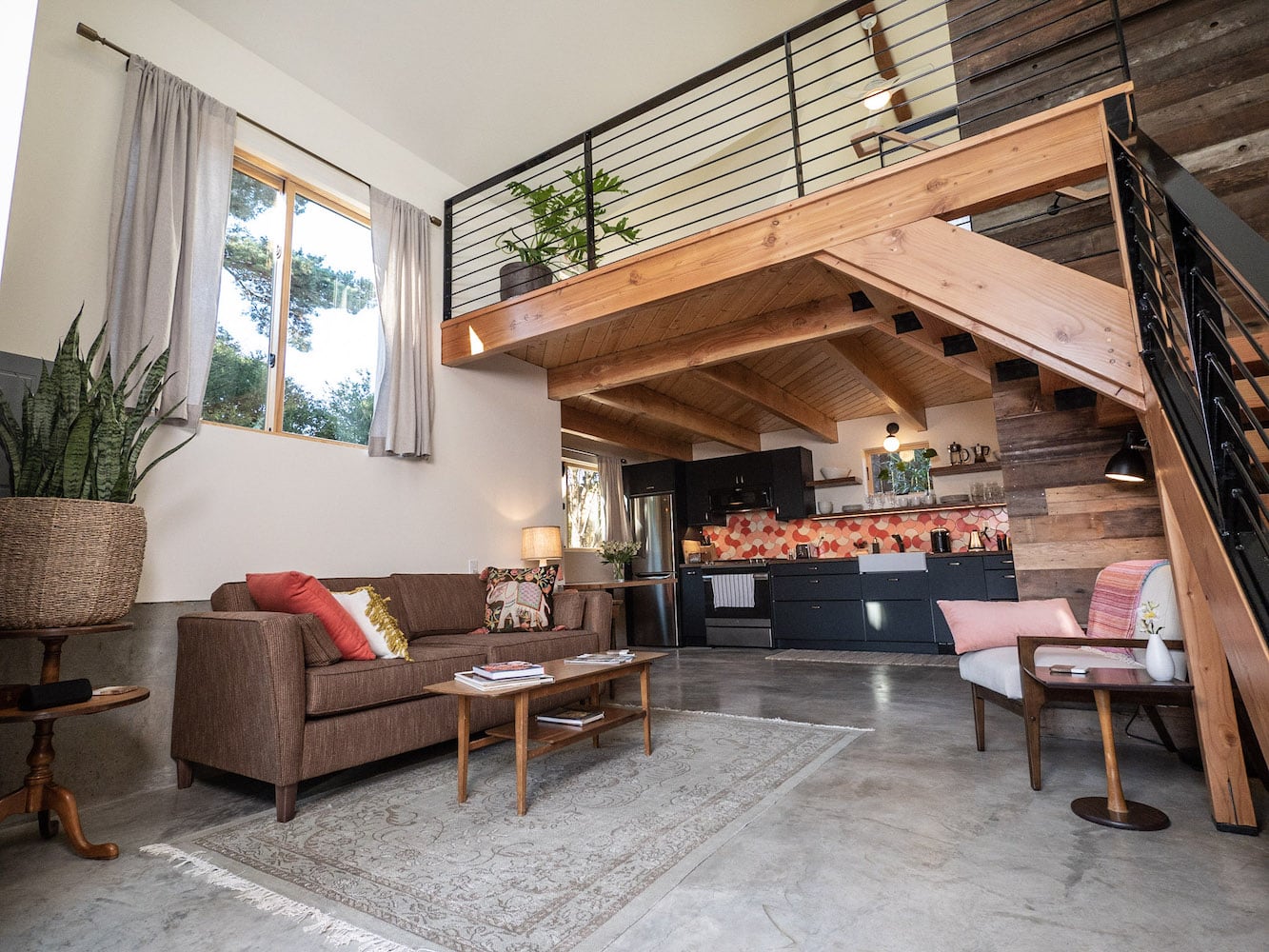
How to Sell Your Berkeley ADU as a Standalone Condo: The 2026 AB 1033 Playbook
Updated August 31, 2026 — corrected rent-control coverage thresholds, the council vote dates, and Berkeley's condominium map requirement.
CAN BERKELEY HOMEOWNERS NOW SELL THEIR ADU SEPARATELY FROM THE MAIN HOUSE?
Yes. On January 20, 2026, the Berkeley City Council voted 6–1 on first reading of Ordinance No. 7,999-N.S., adding Berkeley Municipal Code Chapter 21.29 (BMC 21.29) to implement California's AB 1033 (Government Code §66342). Second reading was adopted February 10, 2026, 7–0, making Berkeley one of the first cities in the state to allow homeowners to subdivide a single-family lot, place the accessory dwelling unit under its own title, and sell it as a standalone condominium. AB 1033 has been state law since January 1, 2024, but it is permissive, not automatic. Each city has to adopt its own enabling ordinance. Berkeley has. Most surrounding East Bay cities have not as of this writing — but the list changes, and the trackers you'll find online contradict each other. Confirm your own city's status directly with its planning department before making any decision.
For Berkeley homeowners with an existing ADU, this is the most consequential ownership change in years. A backyard cottage that had been a rental asset became a potentially marketable condominium — a unit that may be worth six figures on its own, depending on size, condition, and location. The mechanics, though, are not simple. Below is what every Berkeley homeowner considering this should understand before deciding whether to convert and sell.
DOES YOUR ADU QUALIFY?
Under BMC 21.29.030, the lot must contain a legally established primary dwelling and a legally established ADU (or a valid building permit for a new ADU), and the ADU must be in compliance with BMC Chapter 23.306. The subdivision must result in 10 or fewer total condominium units on the lot, counting residential, commercial, and ADU units. Junior ADUs (JADUs) are expressly ineligible.
Applications are reviewed ministerially: the Planning Director approves or denies against fixed criteria, without a public hearing (BMC 21.29.020).
WHAT CHANGED IN BERKELEY ON JANUARY 20, 2026
The state framework is AB 1033, signed by Governor Newsom in October 2023. It gave California cities the authority — not the obligation — to allow ADUs on single-family lots to be sold separately as condominium units. Each city has to opt in by passing a local ordinance.
Berkeley's ordinance does three things that matter to a homeowner thinking about this:
It allows fast-tracked approval. The condominium conversion is reviewed ministerially, without a public hearing (BMC 21.29.020). That removes weeks or months from the timeline.
It waives the city's standard condo conversion fee. Berkeley normally charges a fee to convert rental apartments into for-sale condominiums; AB 1033 conversions are exempt.
It includes a limited tenant protection. If the ADU is currently occupied by a tenant covered under Berkeley's rent control rules, that tenant gets a three-month right of first refusal — the right to make the first offer to purchase the unit before it can be marketed publicly. A Lunaparra/Bartlett floor motion to extend the right of first refusal to all ADU tenants and shorten it from one year to 90 days failed 4–3. A December supplemental from Lunaparra (co-sponsored by Bartlett) that would have added a five-year bar on conversions after a no-fault eviction, and applied the city's Affordable Housing Mitigation Fee to ADU conversions, was not adopted. First reading of Ordinance No. 7,999-N.S. passed 6–1 on January 20, 2026, with Lunaparra voting no. Second reading was adopted February 10, 2026, 7–0.
What the ordinance does not do: it does not shorten the time required for surveying, civil engineering, legal drafting, map recording, or HOA formation. Those steps are governed by the state Subdivision Map Act and California Civil Code, not local ordinance.
THE CONVERSION PROCESS, STEP BY STEP
Selling an ADU as a separate condominium is a real estate transaction layered on top of a subdivision project. The steps are sequential and most cannot be parallelized.
Step 1 — Lender consent. Before anything else, the homeowner has to check whether the existing mortgage on the primary residence permits the subdivision. Most deeds of trust contain language preserving the lender's security interest in the entire parcel, which means subdividing it requires written consent. This is the most common gating issue and the one most homeowners discover too late. Some lenders will allow it with a partial release; others will require refinancing or paying down principal.
Step 2 — Survey and condominium map. A licensed land surveyor and civil engineer prepare a condominium plan that legally describes the boundaries of each unit, the common areas, and any easements. National coverage sometimes says AB 1033 conveyances aren't subdivisions under the Subdivision Map Act, so no map is needed. That is not what the statute says. Government Code §66342(b) requires the condominiums to be created in conformance with the Subdivision Map Act and local subdivision ordinances. BMC 21.29.020 implements that: applicants file either a parcel map or a tentative and final map for the ADU condominium subdivision. Budget time and engineering cost accordingly.
Step 3 — CC&Rs and HOA formation. California condominium law, under the Davis-Stirling Common Interest Development Act, requires every condominium project to have a homeowners association — even a two-unit project. The owner has to draft CC&Rs (Covenants, Conditions and Restrictions) governing shared maintenance, insurance, dispute resolution, cost-sharing for roof, driveway, fencing, and utilities, and governance procedures. Most homeowners use a real estate attorney for this step; templates exist but rarely fit a specific property cleanly.
Step 4 — Utility separation. Each unit needs separately metered utilities or a documented shared-utility cost allocation built into the CC&Rs. Many existing ADUs share water, sewer, and sometimes gas with the main house, which means new meters or sub-meters before a clean sale is possible.
Step 5 — DRE review. The CC&Rs and association documents are typically submitted to the California Department of Real Estate as part of a public report application under the Subdivided Lands Law. DRE reviews them for disclosure adequacy, governance provisions, and buyer protections, and a public report generally must be available to buyers before a sale can proceed. This is often the least predictable step in the timeline.
Step 6 — Berkeley fast-tracked approval and map recording. The city signs off, the subdivision map is recorded with the Alameda County Recorder, and each unit gets its own Assessor's Parcel Number (APN).
Step 7 — List for sale. Once recorded, the ADU has its own title and can be financed and sold like any other condominium.
A realistic timeline for the Berkeley fast-tracked version is six to nine months from kickoff to recorded map. The fastest cases close in under six; complicated lender situations or utility separation issues stretch toward a year.
WHAT IT ACTUALLY COSTS
This is the conversation most Berkeley homeowners want to have first, and the public reporting on AB 1033 has been thin on specifics. Based on comparable jurisdiction data and Berkeley-specific factors, expect the following soft costs:
- Surveying and civil engineering: $15,000–$25,000 for a typical two-unit conversion
- Real estate attorney for CC&Rs and HOA setup: $5,000–$15,000
- DRE filing and review fees: $2,000–$5,000
- City of Berkeley fees: Significantly reduced under the new ordinance, but expect $3,000–$8,000 in plan review, map recording, and incidental fees
- Utility separation: $5,000–$30,000 depending on whether new water, sewer, gas, or electrical meters are required
- Lender consent fees or partial release fees: $0–$10,000+ depending on the mortgage
Total soft costs, all in: $30,000–$75,000 for most Berkeley conversions. That number can climb materially if utility separation requires trenching, if the original ADU permits have any compliance gaps that need to be cured first, or if the lender requires a refinance to release the subdivision.
Your specific number depends on your ADU's size, age, utility configuration, mortgage terms, and which corner of Berkeley the property sits in. That is exactly the kind of math I walk clients through before they spend a dollar on a surveyor.
PROPERTY TAX — WHAT REASSESSES AND WHAT DOESN'T
This is the question Berkeley homeowners with long Prop 13 protection ask most often, and the answer is generally good news.
Building an ADU does not trigger Prop 13 reassessment of the primary residence. The ADU itself gets added to the assessed value at its construction cost; the main house keeps its protected base year value.
Subdividing under AB 1033 and selling the ADU as a separate condominium does not by itself reassess the primary residence either. The main home stays under Prop 13. The new condominium unit, once sold, is assessed at its sale price for the new buyer — that becomes the buyer's basis going forward, not the seller's tax problem.
The one thing that does change: the homeowner now owns one APN instead of one parcel containing two structures. The county Assessor will issue separate tax bills going forward, but the underlying valuation logic stays the same. Long-term Berkeley owners with a $200,000 base year value on a $2.5M home do not lose that protection by selling the backyard cottage.
The federal capital gains side is different. Proceeds from selling the ADU are treated as a real estate sale, and the Section 121 primary residence exclusion ($250K single, $500K married) does not generally apply to the ADU portion if the homeowner has not used it as their principal residence. Most Berkeley ADUs have been rented, which means the gain on sale is taxable (and may also trigger depreciation recapture if the unit was previously rented and depreciated). A tax advisor needs to model this before listing.
For background on the federal exclusion, see our capital gains guide for East Bay sellers: https://parkergeorge.com/capital-gains-berkeley-oakland-2026/
WILL BUYERS ACTUALLY WANT A BERKELEY ADU CONDO, AND WILL LENDERS FINANCE THEM?
The honest answer is that this market is still being built. Berkeley's ordinance is four months old. Comparable San Diego data from late 2025 suggests that financing is the bottleneck — most conventional lenders will eventually underwrite an AB 1033 condo, but they need clean CC&Rs, a recorded map, and a fully-formed HOA. Early conversions are encountering longer underwriting timelines and occasional jumbo-vs-conventional limits because the typical ADU sale price falls between standard product tiers.
That said, the demand side is real. Berkeley's median single-family price is around $1.4M in 2026, and the city has produced effectively zero new condominium inventory in decades. A 700-square-foot Berkeley ADU priced at $500,000 is one of the only sub-$1M ownership options inside the city limits. Council framed the goal as creating ownership inventory under $1 million. Berkeleyside, reporting the January 20 meeting, quoted Councilmember Brent Blackaby: "We're trying to create more housing inventory that's available for less than $1 million — and hopefully substantially less than $1 million." My own estimate, based on East Bay price-per-square-foot and what comparable small units trade for, puts most Berkeley ADU condos somewhere in the mid-to-high six figures — but that is an estimate, not a comp set. Nobody has enough closed transactions yet to say otherwise, and you should be skeptical of anyone who claims they do.
Buyer profile is mostly first-time owners priced out of the broader Berkeley market, downsizing seniors who want to stay in the area, and parents purchasing a unit for an adult child while keeping a foot in Berkeley themselves.
WHEN CONVERTING AND SELLING MAKES SENSE — AND WHEN IT DOESN'T
The math works when three things line up. The ADU is large enough and well-built enough to support a sale price comfortably above conversion cost. The existing mortgage permits subdivision without expensive lender requirements. The homeowner does not need the ADU rental income and prefers a lump sum.
The math falls apart when the ADU is older, smaller, or in marginal condition such that the realistic sale price barely clears $50K–$75K in conversion costs. When the existing mortgage is large and the lender requires refinancing — which can mean walking away from a sub-5% rate to subdivide. When the ADU is currently producing strong rental income that the homeowner would have to replace with equivalent investment yield.
A homeowner with a $400,000 attached ADU producing $3,200/month in rent is probably better off holding. A homeowner with a $600,000 detached ADU producing $2,800/month, a small remaining mortgage, and a clear-title path to subdivision is sitting on one of the cleanest exit opportunities in Berkeley real estate right now.
This is exactly the kind of decision that depends on numbers, not opinions. A real net sheet — built from your specific ADU's projected sale price, your conversion costs, your tax exposure, and your mortgage situation — answers it in one conversation.
For context on broader 2026 Berkeley point-of-sale compliance items that may also apply to your main home, see our Berkeley 2026 point-of-sale checklist: https://parkergeorge.com/berkeley-2026-point-of-sale-requirements/
FAQ:
Do I have to offer my tenant the right to buy my Berkeley ADU first?
Only if the tenant is covered under Berkeley's rent control rules. In that case, the ordinance gives the tenant a three-month right of first refusal before the unit can be marketed publicly. If the ADU is owner-occupied or vacant, no right of first refusal applies. Most homeowners get the coverage question wrong, so it is worth being precise. Berkeley's new-construction path runs from June 30, 1980 — not the 1995 date you will see cited for California generally. A unit is treated as newly constructed if its first certificate of occupancy issued after 6/30/80. Those units are partially covered, not fully exempt: they have no rent ceiling but retain just-cause eviction protections (BMC 13.76.050(B)(1) and 13.76.130). The wrinkle that catches ADU owners: many ADUs never received a certificate of occupancy. Under Rent Board Regulation 510, a unit without one qualifies for that path only if it is a detached unit constructed from the ground up. A unit created by conversion or substantial rehabilitation of an existing structure does not qualify unless a certificate of occupancy issued for that unit after June 30, 1980. Practically: if your ADU is a conversion with a long-term tenant and no certificate of occupancy after that date, assume it may be fully covered until the Rent Board tells you otherwise. Check your specific unit's status with the Berkeley Rent Board before you plan around it.
Does selling my ADU as a condo reassess my primary residence under Prop 13?
No. The primary residence retains its Prop 13 base year value. Only the newly created condominium unit is reassessed, and that reassessment becomes the buyer's basis — not yours.
Can I sell my Oakland or Piedmont ADU as a separate condo under AB 1033?
Berkeley is the East Bay city with an adopted AB 1033 ordinance on the books. Neighboring cities may follow, and some have studied it, but each has to pass its own ordinance before separate ADU sale is available there. Be careful with the city lists circulating online — published trackers flatly contradict each other on which cities have adopted, including for Oakland. The only reliable answer is your city's planning department. If you're outside Berkeley and want to know where things stand, reach out and I'll help you find out.
How long does the full conversion process take in Berkeley?
Six to nine months is realistic for the fast-tracked Berkeley process. Lender consent, utility separation, and CC&R drafting are the steps that vary most. Cases involving a refinance or trenching for new utility lines can run twelve months or longer.
What does it cost to convert my ADU into a sellable condo?
Most Berkeley conversions land between $30,000 and $75,000 in total soft costs — surveying, legal, DRE filing, utility separation, and city fees. Utility separation is the wildcard; properties with shared water, sewer, and gas lines see the higher end of the range.
THE BOTTOM LINE FOR BERKELEY HOMEOWNERS WITH ADUS
Berkeley's January 2026 ordinance turned a long-tenured rental asset into a marketable condominium for thousands of local homeowners. The conversion is real, the process is workable, and the value creation in the right circumstance is substantial. The math is also unforgiving: $30K–$75K in upfront costs against an asset that may or may not finance cleanly, with lender consent as the most common dealbreaker.
For Berkeley homeowners actively thinking about this, the highest-leverage step is the one most people skip: model your specific net before you commission anything. A real net sheet built around your ADU's projected sale price, your conversion costs, your tax exposure, and your mortgage terms tells you in one afternoon whether the AB 1033 path is the right move or whether holding makes more sense.
Want to know your specific number? I prepare a custom net sheet for every seller I work with — actual estimated proceeds based on East Bay market data, your home's condition, and current closing costs. No automated estimate, no generic Zestimate. Just real numbers.
Get your custom net sheet → https://parkergeorge.com/home-valuation
ABOUT THE AUTHOR
Robert Parker is the CEO and team lead of The Parker George Team at Compass, serving the East Bay luxury residential market in Berkeley, Oakland, Piedmont, and surrounding neighborhoods. He helps buyers and sellers navigate the $1M–$5M+ market with a data-driven approach grounded in over a decade of local experience. DRE# 01923837. Connect with Robert at parkergeorge.com.
Check out this article next