

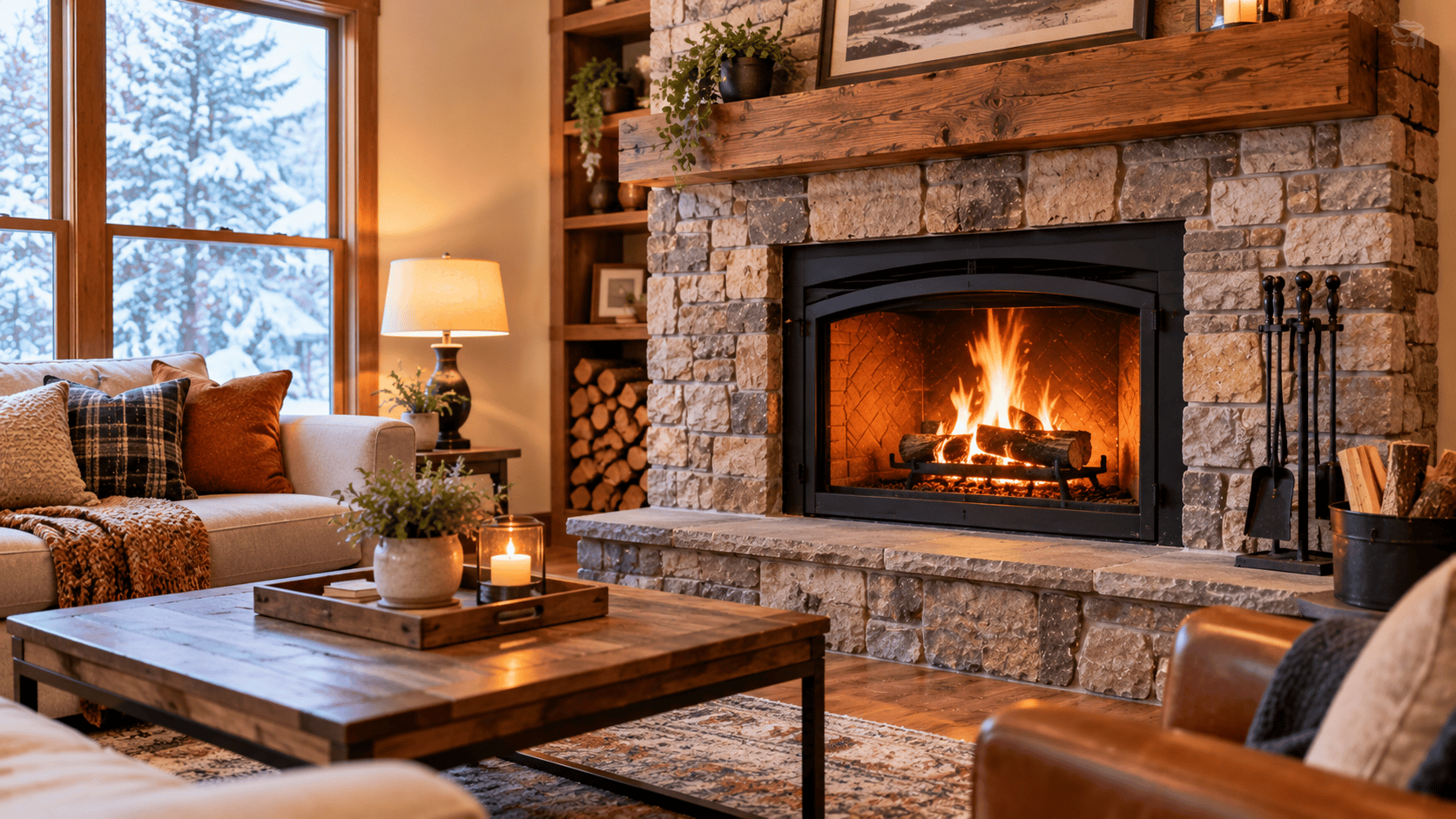
Selling a Berkeley or Oakland Home With a Wood-Burning Fireplace in 2026: The Disclosure You Owe, the Retrofit You Don't, and the Inspection Nobody Runs
Do you have to replace a wood-burning fireplace before selling a home in Berkeley or Oakland?
No. No Bay Area or California rule forces you to remove, replace, or retrofit a wood-burning fireplace before you sell—the Bay Area Air Quality Management District proposed exactly that in 2015 and withdrew it. What the adopted rule does require, under Regulation 6, Rule 3, Section 304, is that anyone selling, renting, or leasing property with a wood-burning device provide a written disclosure describing the health hazards of fine particulate matter. That one-page form is almost always missing from East Bay disclosure packages, and it is the part sellers get wrong.
Every winter I get the same call from a Berkeley or Oakland seller, and it usually starts the same way: someone told me I have to deal with the fireplace before I can list.
The fear is understandable. The answer is simpler and cheaper than most people expect—but it comes with a second problem nobody warns you about, and that one does cost money.
The timing matters this year. The winter Spare the Air season runs November 1 through the end of February, and on October 1, 2025, the Air District lowered the threshold that triggers a Spare the Air Alert from 35 to 25 micrograms per cubic meter of fine particulate matter. The Air District's own guidance is that alerts will be issued more frequently this season as a result. If you are listing a home with a fireplace between now and spring, your buyers will be touring it during the exact weeks they cannot legally use it.
What the Bay Area wood-burning rule actually requires when you sell
The rule people half-remember is real, but it is not the rule they think it is.
In 2015 the Air District proposed a point-of-sale mandate—replace or upgrade a non-certified wood-burning device before transferring the property. It did not survive public comment. The District's own response to comments is unusually blunt about where it landed: "The 'point-of-sale' proposal has been replaced with a PM2.5 disclosure requirement," and "There is no proposed real estate requirement that forces sellers to replace or upgrade a fireplace upon sale or transfer of property."
So what is actually on you as a seller:
- Regulation 6-3-304—the disclosure. Any person selling, renting, or leasing real property must provide sale or rental disclosure documents describing the health hazards of PM2.5 from burning wood or solid fuel. The Air District publishes a ready-made one-page form. It should be signed and dated by the buyer on receipt, and it belongs in your disclosure package alongside the TDS and SPQ.
- Regulation 6-3-303—the appliance itself. You cannot advertise, sell, supply, install, or transfer a used wood-burning device unless it meets EPA standards — with an express exception for existing fixtures included in the sale of a property. Translation: selling the house with the fireplace or stove in place is fine. Pulling the old stove out and selling it on Marketplace is not.
- Regulation 6-3-305—if any part of the property is rented. Property offered for lease or rent in an area with natural gas service must have a permanently installed form of heat that does not burn solid fuel. If your home has a tenant-occupied unit or ADU heated only by a wood stove, that is a live issue before you list, not after.
- Regulation 6-3-306—new construction. No wood-burning device may be installed in new building construction. Relevant if you are selling a recent build and a buyer asks why there isn't one.
Berkeley adds its own layer. Berkeley Municipal Code 19.28.040 prohibits installing a non-EPA-certified wood-burning fireplace or heater in any occupancy, requires anyone installing one to submit verifiable documentation to the City showing it conforms, and expressly permits repair of existing masonry fireplaces, including resurfacing the combustion chamber, under the codes in effect at the time of the repair. Note what that means in practice: repairing what you have is clearly allowed. Upgrading to something new triggers a permit, a documentation requirement, and a city review. Sellers who decide to "just put in a nice insert" four weeks before listing routinely discover this the hard way. Chimney and fireplace work does not appear anywhere on Berkeley's list of work exempt from building permits, and a permit pulled in a hurry is how a clean file turns into the kind of problem I wrote about in selling a Berkeley or Oakland home with unpermitted work.
One more distinction worth drawing, because these get conflated constantly. The Air District's Regulation 9 rules—the ones driving the Bay Area's move away from gas—apply to fan-type residential central furnaces and water heaters. They do not govern fireplaces. If you are selling a home with an aging furnace or water heater, that is a separate and much more expensive conversation, and I covered it in the Bay Area gas appliance ban and your East Bay home sale.
The chimney nobody inspects—and why it surfaces in week two of escrow
This is the part that actually costs East Bay sellers money, and it is structural to how California inspections work.
California defines a home inspection, in Business and Professions Code Section 7195, as "a noninvasive, physical examination... of the mechanical, electrical, or plumbing systems or the structural and essential components of a residential dwelling." Two things follow from that sentence. The word is "noninvasive"—your general inspector is not scoping the flue. And the statutory description of what a home inspection covers does not name the chimney or fireplace at all.
So the standard disclosure package on a 1920s Elmwood bungalow or a Rockridge brown shingle contains a general inspection, a pest report, and a sewer lateral video—and nothing about the masonry stack running up through the middle of the house. The chimney industry standard (NFPA 211, as applied by the Chimney Safety Institute of America) calls for a Level 2 inspection—one that includes video scanning of the flue interior—specifically upon sale or transfer of a property and after any chimney fire, earthquake, or other external event affecting the structure. That standard is industry practice, not California law. Nobody is going to cite you for skipping it.
Your buyer's agent will ask for it anyway. And in a market where Oakland homes went into contract in a median of 22 days in August 2026, with 65.8% selling above list, the request lands after you have already accepted an offer and taken the strongest competing buyer off the table.
There is also a disclosure trap specific to older East Bay housing stock. If your home was built before January 1, 1960, and has one to four units of conventional light-frame construction—which describes a very large share of Berkeley, Albany, Kensington, and the Oakland flatlands and hills—you must deliver the Homeowner's Guide to Earthquake Safety and complete the Residential Earthquake Hazards Report. Many sellers assume that form covers the chimney. It does not. Its ten numbered weaknesses cover water heater strapping, foundation bolting, cripple walls, unreinforced masonry foundations and exterior walls, hillside foundation bracing, living areas over garages, post-to-beam connections, garage perimeter walls, and gas shutoff—and no item asks about the chimney. An unreinforced masonry chimney on a pre-1960 house therefore has to be disclosed through the TDS and the SPQ on your own knowledge, not captured by the earthquake form. The statutory TDS checklist does list "Fireplace(s) in ____ Gas Starter ____" as an item, and failing to deliver the earthquake package does not invalidate the transfer—but neither fact helps you if a buyer discovers a cracked flue you knew about and did not write down.
This is exactly the kind of question I walk sellers through before we talk about pricing, because the cost of a chimney report before listing is a rounding error next to the credit a buyer will ask for once they are in contract and holding the inspection contingency.
What to actually do before you list
In the order I would do it.
- Get the BAAQMD disclosure form into the package. It is free, it takes five minutes, and your title company or transaction coordinator can slot it in next to the natural hazard report. Have the buyer sign and date it.
- Order a Level 2 chimney inspection before you list, not after. You want the video scan and the written report in your hands while you still control the timeline. Pre-listing inspections are already the East Bay convention for exactly this reason—see how East Bay sellers use pre-listing inspections.
- Confirm your carbon monoxide alarms. California has required a state fire marshal–approved CO alarm in any residential property with a fossil-fuel-burning appliance, a fireplace, or an attached garage since July 1, 2011 for single-family homes and January 1, 2013 for other residential units. A fireplace alone triggers it. It is one of the cheapest items on this list; it shows up on inspection reports, and missing it makes a careful seller look careless.
- Decide repair, decommission, or disclose as-is—with a real report in front of you. All three are legitimate. Repairing an existing masonry fireplace is expressly contemplated by Berkeley's code. Formally decommissioning a chimney you were never going to use is often cheaper than rebuilding it and removes the buyer's open question. Disclosing a known defect and pricing accordingly is fine, as long as the disclosure is complete.
- Do not pre-emptively tear anything out. You will trigger a permit, a documentation requirement, and potentially a structural scope you did not plan for.
A word on the money. Published chimney repair ranges come from national contractor-estimate aggregators, not East Bay transaction data, and local bids on hillside and multi-story homes routinely land outside them. Get two bids from licensed local contractors and treat anything you read online as a starting point.
Be equally skeptical about the value side. The widely repeated figures — that a fireplace adds roughly $1,000 to $5,000 in value, or that homes with fireplaces list about 13% above the national median — trace back to an Angi consumer survey and to agents' own estimates, not to recorded sale data. Redfin, which publishes the figures, says plainly that the listing premium and the actual dollars realized at close are not the same thing, and notes that only about 35% of buyers agree a fireplace justifies a premium. Survey data about what agents and buyers say is not a basis for pricing a $1.5M Berkeley house, and I will not build a recommendation on it. In this market, condition, disclosure quality, and timing move your number. A hearth does not.
One last note on enforcement, because buyers ask. Through early 2022, the Air District had logged 1,255 wood-smoke complaints in Oakland since 2008 and issued 25 fines, concentrated in the hill neighborhoods around Montclair and Oakmore. Enforcement is complaint-driven and the penalties are modest: $100 for a first violation, waivable by taking a wood smoke awareness class, and $500 for a second. Those are your buyer's problem after close, not yours. But a buyer who learns about the winter burn ban from the internet rather than from your disclosure package starts the inspection period feeling misled, and that costs more than a fine.
FAQ
Do I have to disclose a wood-burning fireplace when selling a home in Berkeley or Oakland?
Yes, in two separate ways. Air District Regulation 6-3-304 requires you to provide a written disclosure of the health hazards of PM2.5 from burning wood or solid fuel, signed and dated by the buyer. Separately, the condition of the fireplace and chimney is a material fact that belongs on your Transfer Disclosure Statement and Seller Property Questionnaire to the extent you know about it. The statutory TDS checklist includes a fireplace line item.
Can I be forced to remove or replace my fireplace before closing?
Not by any Bay Area or California rule. The Air District considered a point-of-sale replacement mandate in 2015 and replaced it with the disclosure requirement instead, stating that no real estate requirement forces sellers to replace or upgrade a fireplace upon sale or transfer. A buyer can still ask you to repair or credit as part of their request for repairs, which is a negotiation, not a legal obligation.
Will the general home inspector check my chimney?
Largely no. California defines a home inspection as a noninvasive examination of mechanical, electrical, and plumbing systems and structural and essential components, and the statutory description does not name the chimney or fireplace. A general inspector will note visible exterior cracking and may recommend further evaluation. Scanning the flue interior requires a Level 2 chimney inspection from a chimney specialist.
Does the earthquake disclosure form cover my unreinforced masonry chimney?
No. For a pre-1960 one-to-four-unit light-frame home you must deliver the Homeowner's Guide to Earthquake Safety and complete the Residential Earthquake Hazards Report, but none of that form's ten weakness items asks about the chimney. A known chimney defect has to be disclosed on your TDS and SPQ.
Is it worth converting to gas or decommissioning before I list?
It depends entirely on what the chimney report says and what your buyer pool wants, and it is worth noting that a new install in Berkeley must be EPA-certified with documentation submitted to the City, while repairing your existing masonry fireplace is expressly permitted. Decommissioning is often the cheaper way to close a buyer's open question on a chimney you were never going to use. Get the report first, then decide.
When does the Bay Area winter burn ban apply?
The winter Spare the Air season runs November 1 through the end of February. On alert days, burning wood, manufactured fire logs, or any other solid fuel is banned both indoors and outdoors. As of October 1, 2025 the Air District lowered the alert threshold from 35 to 25 micrograms per cubic meter of fine particulate matter, so expect alerts more often than in past seasons. Confirm current alert status with the Air District.
The takeaway
The fireplace itself is rarely the problem. The missing one-page disclosure and the un-inspected flue are the problems, and both are solvable before you list rather than in credits after you are in contract. If your Berkeley home is also facing energy-disclosure obligations, read Berkeley's BESO ordinance and what it means for sellers alongside this.
Want to know your specific number? I prepare a custom net sheet for every seller I work with — actual estimated proceeds based on East Bay market data, your home's condition, and current closing costs. No automated estimate, no generic Zestimate. Just real numbers.
About Robert Parker
Robert Parker is the CEO and team lead of The Parker George Team at Compass, serving the East Bay luxury residential market in Berkeley, Oakland, Piedmont, and surrounding neighborhoods. He helps buyers and sellers navigate the $1M–$5M+ market with a data-driven approach grounded in over a decade of local experience. Connect with Robert at parkergeorge.com. DRE# 01923837.
Check out this article next